
Together, for MRKH.
This February, we’re inviting 500 people to donate $10 — and add their name to a growing wall of allies standing beside the MRKH community.
Gratitude Wall
With heartfelt thanks.
Each name below represents a person who chose to stand with the MRKH community.
Together, these names tell a powerful story of care, unity, and hope. Each name sends the message to people living with MRKH that their story matters, they are heard and seen and their experience matters.
Anonymous Jemma L Donna K Erin Brooke Stephanie Snezana Vanessa Craig S Kylie S Bonnie Jodie Jacob Ray Alex Peter Hallie Charlie Mark Simone Kristen Rachel April Paul Lynne Louise Cherrie April Lisa Michelle Cecilia Portz Kastubh Thi Mansura Sarah Amanda Andrew Audrey Cassidy Robyn Pamela April Craig
Stand beside people impacted by MRKH this February - show them they matter.
Our February goal is simple but powerful:
500 people giving $10.
Five hundred names.
Five hundred moments of solidarity.
Five hundred reminders to everyone living with MRKH that they are seen, supported, and part of something bigger.
This campaign is about funding vital work — peer support, trusted resources, advocacy and education — but it is also about visibility. When someone receives an MRKH diagnosis, isolation can arrive quickly. Together for MRKH counters that isolation with something tangible: a growing community of people who care.
Every $10 donation adds a name to our Gratitude Wall.
Each name is a quiet but powerful statement: you are not alone.
Reaching our goal of 500 people means more than raising $5,000. It means showing — in a way that can be seen and felt — how many allies stand beside the MRKH community. Friends. Family members. Clinicians. Organisations. Strangers who simply believe no one should walk this path alone.
You don’t need to have MRKH to be part of this.
You only need to be willing to stand with those who do.
Add your name.
Be counted.
Together for MRKH.
What is MRKH Syndrome?
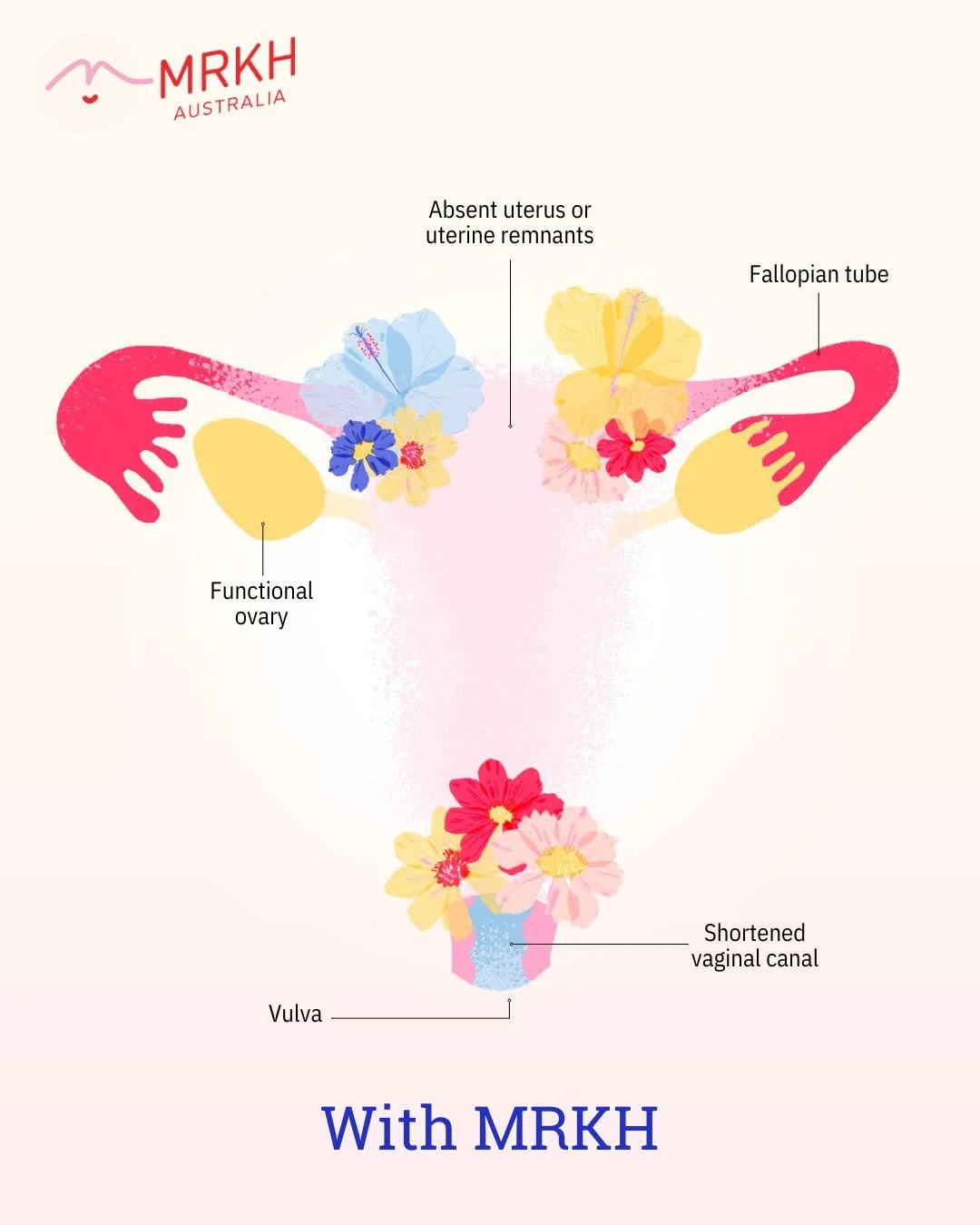
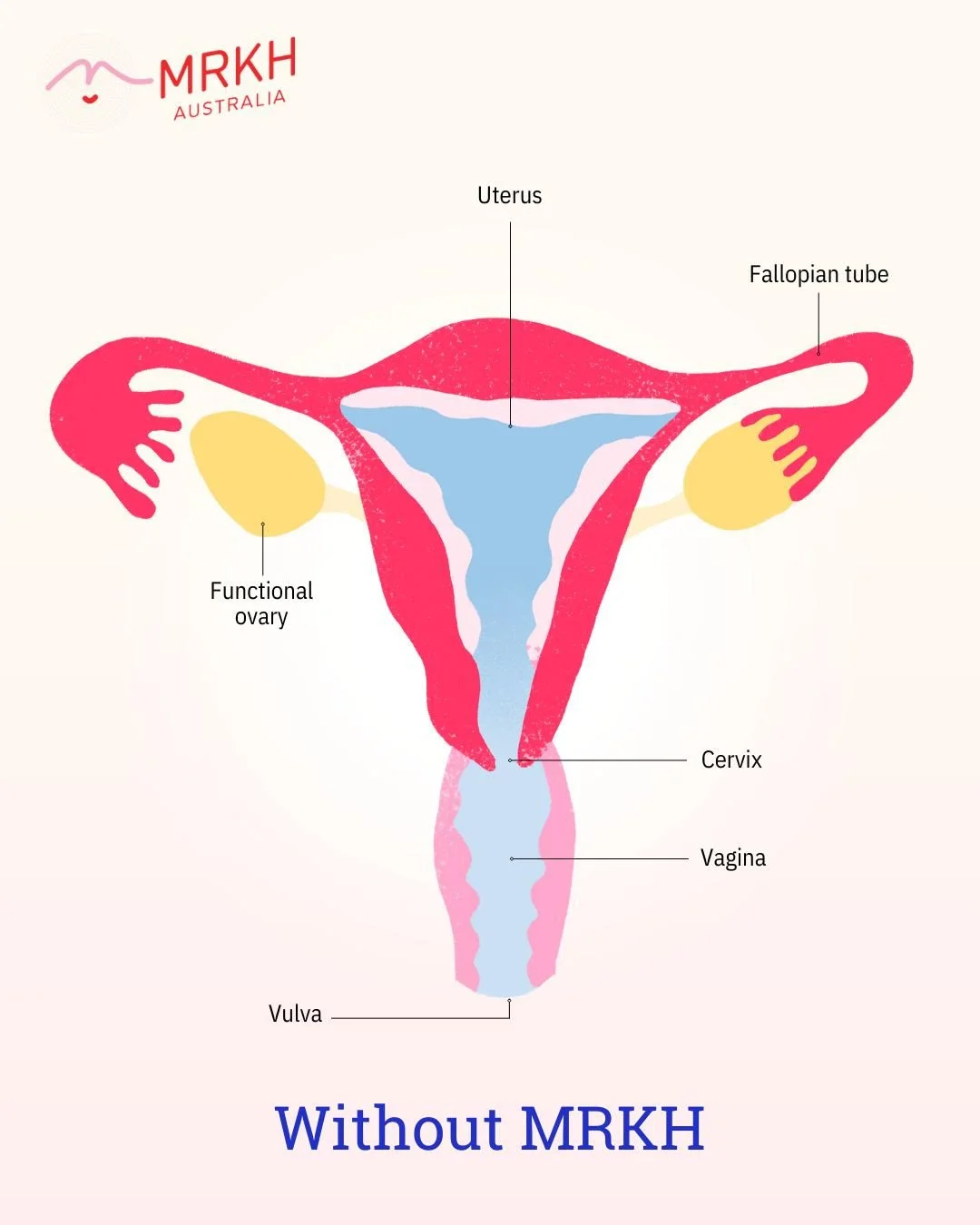
Mayer-Rokitansky-Küster-Hauser (MRKH) Syndrome is a congenital condition (meaning present at birth). MRKH occurs in 1 in 5000 females. Typically, MKRH is characterised by the under development or absence of the uterus, cervix and upper portion of the vagina.
Due to the absence of the uterus, people with MRKH will typically not experience menstrual periods, medically known as amenorrhea. Primary amenorrhea (absence of periods) is the most common reason that women with MRKH present for medical investigation. People with MRKH syndrome have female chromosomes (46XX) and typical ovarian function.
MRKH syndrome comprise of a collection of symptoms that results in the incomplete formation of the Mullerian ducts. This occurs in the first 6-8 weeks of gestation. There are currently no known environmental or inherent factors for why this occurs. Because the ovaries are producing hormones appropriately, people with MRKH will have typical external genitalia and breast development and although a person with MRKH is incapable of carrying a pregnancy, they are able to have biological children through gestational surrogacy with the assistance with reproductive technologies such as IVF (in vitro fertilisation).
Some people with MRKH have other congenital anomalies, such as renal agenesis (absence of kidney), skeletal abnormalities, hearing loss and/or heart defects.
How your contribution is used
MRKH Australia is a volunteer-run organisation, with all committee members and contributors donating their time and expertise without payment. Funds raised are therefore directed toward the costs required to run the charity and deliver its work, rather than remunerating volunteers.
Funds raised for MRKH Australia will be used to support people with MRKH and related variations in sex characteristics through advocacy, education, and community development. This includes advocating for improved MRKH-related health and psychosocial services, developing evidence-informed resources, and delivering awareness and education campaigns for both the community and professionals.
Funds may also be used to support the delivery of MRKH conferences and events, including venue, accessibility, and speaker costs; to assist individuals with lived experience to attend conferences or training; to cover essential administrative and operational expenses such as governance, insurance, compliance, technology, communications, and day-to-day running costs; and to develop a sustainable business and fundraising plan to ensure the long-term financial stability of the organisation.
All funds are directed toward strengthening community connection, increasing visibility and understanding of MRKH, and improving access to informed, affirming care and support, while ensuring MRKH Australia can operate sustainably, responsibly, and into the future.